
Area Guide · Island

About Sumba

Sumba is a large, dry, hilly island in eastern Indonesia — closer in feel to parts of Africa or old Portugal than to Bali. It is famous for its megalithic villages, ikat weaving, wild horses and long, empty coastlines. It is not a party island, and it is not on most tourist itineraries. That is precisely why the land you can still buy here is so unusual.

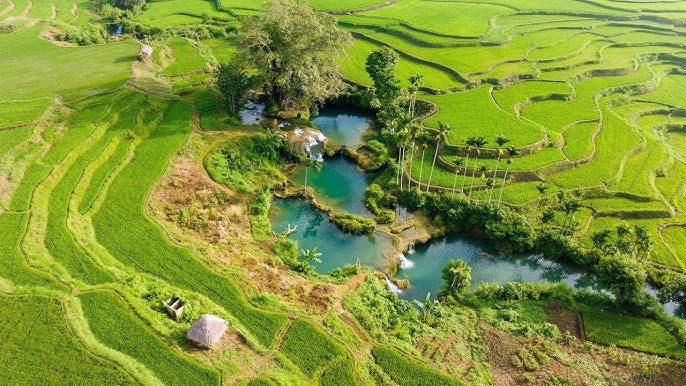
Aerial view of a Sumba waterfall surrounded by emerald rice terraces

Summary — Sumba in one page

The essentials most buyers want to understand first:

  • Located in East Nusa Tenggara (NTT), roughly 400 km east of Bali
  • Size: ~11,000 km² — larger than Bali, with ~780,000 residents
  • Two administrative provinces on the island: West Sumba and East Sumba, subdivided into four regencies
  • Airports: Tambolaka (TMC) in the west, Waingapu (WGP) in the east — direct flights from Bali daily
  • Dry, savannah-like climate; distinct wet (Dec–Mar) and dry (Apr–Nov) seasons
  • Predominantly Christian in the west, mixed Christian/Marapu (indigenous belief) island-wide

Geography and regions

West Sumba

The wetter, greener side. Rice terraces, waterfalls, rolling hills and the surf coast (Wanokaka, Lamboya, Pero) that first attracted Nihi and its peers. Tambolaka is the main airport town in Southwest Sumba regency.

East Sumba

Drier, more open, dominated by savannah and long white-sand beaches. Waingapu is the administrative capital of the island; Mangili and the southeast coast hold some of the most dramatic undeveloped shoreline in Indonesia.

The interior

Hilltop villages with tall thatched roofs, standing stones and ancestral burial grounds. Much of the interior is still customary (adat) land — beautiful, but not straightforward to buy.

Culture and community

Sumba's culture is unusually intact. Traditional villages, ceremonies, funerals and the Pasola (ritual mounted spear-jousting in February–March) are not tourist performances — they are living community life. This matters for buyers: relationships with village elders, respect for adat land rights and a slower pace of transaction are not obstacles, they are the point. Projects that ignore the community fail; projects that engage it thrive.

Climate and seasons

Sumba's climate is drier and more predictable than most of Indonesia:

  • Dry season (April–November) — sunny, breezy, dust in late dry, ideal for construction and travel
  • Wet season (December–March) — heavy but usually short rains; roads in the interior can become tricky
  • Trade winds shape coastal design — orientation and overhangs matter more than in Bali
  • Coastal humidity is lower than Bali; interior nights are pleasantly cool

Access and infrastructure

Two airports (Tambolaka TMC, Waingapu WGP), each with multiple daily flights from Bali (~1 hour). Paved main roads connect the airports and regional capitals; secondary roads are being upgraded steadily. Grid electricity reaches most of the coast; solar and battery is standard for higher-end villas. Internet via 4G/5G is workable island-wide, with Starlink filling the gaps for remote sites.

Why buyers choose Sumba

The recurring themes among the people we work with:

  • Coastline that in Bali would be gone — here it is still available and largely intact
  • Prices per m² a fraction of comparable Bali locations
  • A cultural depth and landscape scale that Bali no longer offers
  • Genuine potential for boutique hospitality and long-term family estates
  • Regulatory clarity is improving; the honest work is finding plots with clean paperwork
Why Best Island Projects

We are Sumba-based, not remote.

Best Island Projects operates on the ground in Sumba with long-standing local relationships. Every plot we present has been walked, verified and cross-checked with village authorities and the district land office — not sourced from a WhatsApp listing.

Frequently Asked

Questions from international buyers

For specific questions about a plot, area or process, request a private consultation.

  • Where exactly is Sumba?
    Sumba lies in East Nusa Tenggara (NTT), Indonesia — roughly 400 km east of Bali and south of Flores. It is reachable by a one-hour flight from Bali to either Tambolaka (TMC, west) or Waingapu (WGP, east).
  • How is Sumba different from Bali?
    Sumba is drier, larger, less developed and culturally distinct. It has no mass tourism, no traffic, and coastline still available on the open market. It is not a substitute for Bali — it is a different proposition entirely, closer to what parts of Bali felt like decades ago.
  • Is Sumba safe for foreign buyers and visitors?
    Yes. Sumba is a calm, welcoming island with very low crime. The risks for buyers are legal and procedural (title, zoning, community consent) rather than personal safety. Those risks are managed with proper due diligence.
  • What is the best time of year to visit Sumba?
    May to September for reliably dry, breezy weather and the greenest landscape after the rains. February–March if you want to witness the Pasola. Construction and site visits are most efficient April–October.
  • Can foreigners buy land in Sumba?
    Not as freehold (SHM) in their own name — that applies everywhere in Indonesia. Foreigners buy via PT PMA + HGB, long-lease, or Hak Pakai (for residents). We cover this in detail in our Legal & Tax Insights hub.
Private Guidance

Planning your first visit?

Tell us what you are looking for and we will build an itinerary that shows you the right side of Sumba for your project — coastline, interior, and the communities that make it work.